Showing posts with label History. Show all posts

Friday, 14 October 2016

Thoppikaran- the hat man of Tanjore temple

If you've visited Tanjore's famed Brihadeeswara temple and spent your sweet time looking at the murals and sculptures adorning the famed Rajagopuram, you can never miss him. He is to the Eastern side of the gopuram- with both his hands folded, a cheeky smile on his face, arches brows and a coat, probably adorned with a rose or a pin and to top it all, a hat. His features distinctly Caucasian, how did his stucco end up in the 1100 year old Tanjore temple?

All of our hypotheses point to one man- the Briton Colonel William Lambton, the man who was behind the Great Trigonometrical Survey of India that mapped the planes and was the pivotal point of all surveys undertaken in India. Granted permission to survey India in 1800s, Lambton successfully surveyed the distance from Fort St George to Mysore and from there proceeded to the plains of South India. His handwritten notes of the same are available in Asiatic Journal, with his calculations.

He found the plains of Cauvery delta difficult to map and hence used the temple tops for his measurements of geodesy. It was during July 1808, during the reign of Serfoji II of Tanjore that Lambton arrived at Tanjore to measure from the heights of Tanjore's Rajagopuram. After his signing a Treaty that made Tanjore part of Madras Presidency, British East India Company had adequate control of Tanjore.

Lambton used a giant theodolite made by William Cary to measure the altitudes and it was mounted on Tanjore temple's gopuram. The half a ton mammoth theodolite somehow lost balance and fell down from the gopuram, chipping off a portion of the gopuram. Lambton stayed back at Tanjore, himself repairing the theodolite, if on his own wish or under orders of Serfoji II, we never know.

Was it a wanton ploy by Lambton to chisel his own feature on the gopuram or was it by some cheeky sculptor who wanted to please his British Lord, or Serfoji himself permitted the new change, we find ourselves peering at the hat man in our gopuram. Alongside the murals and sculptures of danseuses and Gods 1100 years old, stands the lone Britishman in his hat, in all regal glory, a new 19th century addition. Excerpt from the Engineer journal published on July 1, 1870, that explains in detail about the Great Trigonometrical Survey of India mentions about the Tanjore incident, the fall of the theodolite from Tanjore temple's Gopuram and the resultant repair of the same at the place itself by Lambton.

Lambton died in 1823 at Hinganghat, Wardha, while still conducting his survey. There is a memorial for him at Wardha where he is buried and a stone plaque mentioning the GTS standard benchmark 1907 is still intact. Better than any memorial is this sculpture of Thoppikaran atop the Brihadeeswara Temple, Tanjore. It was Lambton who carved out the modern map of India, with all topographical features. A fitting tribute to him, would definitely be the place where he is today, with his cheeky smile and hat!

Pictures:
1. Tanjore Brihadeeswara Temple

2. Thoppikaran in Tanjore Gopuram

3. File picture of Col Lambton

4. Model of the theodolite used by Lambton

5. Article in The Engineer, July 1, 1870 about the GTS

6. The para mentioning the fall of theodolite from Tanjore Gopuram and Lambton's repairing it

7. Lambton memorial at Hinganghat, Wardha

8. Stone plaque of original GTS with inscription at Wardha


Credit: Karthik Lokhande's blog
The Engineer Journal

The life of John De Monte- spooky stories and a sad man

A life full of tragedy. Money so huge involved. Hundreds of acres of land in the heart of the city all willed to a church. Spooky roads. Welcome to the life and times of John De Monte. The biggest benefactor of the Mylapore Archdiocese. The man rumoured to still haunt the De Monte Colony. 

He smiles in the picture hanging at the church museum in Santhome. A sad smile not quite reaching his eyes. He was a celebrated Portuguese merchant when he entered Madras after his successful stint at Pondicherry. Married into the rich German Bilderbeck family. The Bilderbecks were pearl merchants in Madras who even had an indigo factory at Colachel, Travancore. Mary Bilderbeck De Monte gave birth to Christopher De Monte, the son who was to have carried forward the De Monte clan.

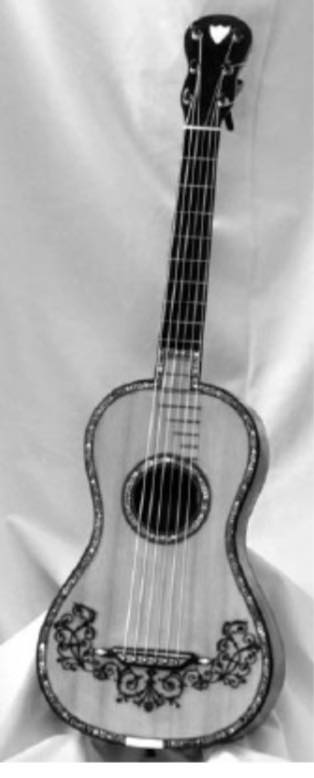
In 1810, at the age of 16, Christopher was sent to England for further studies where he was struck with intermittent malaria. Still, the French Revolution intrigued him and he set out a travel around the continent in 1815. He attended the Ball that Lady Richmond gave in Brussels for the Duke of Wellington on the eve of Battle of Waterloo. He was an amateur guitarist who struck an unusual friendship with Mauro Giuliani, the famed musician and composer who gifted him the guitar handed over to him by Empress Marie-Louise. The guitar and his handwritten letter to Christopher have been discovered recently.

In 1816, Christopher had an untimely death- probably in a duel just when he was about to leave for Madras. It was his bones that reached the grieving John De Monte. Mary De Monte went mentally deranged after the incident, roamed the streets of Madras, while John owned 500 acres of prime land and posh garden houses, including the Mowbray's Cupola that now houses the Madras Club. 

Mary had wandered off to Covelong and John is supposed to have tracked her down and built her a house there to pacify the poor woman. He also built the Our Lady of Mount Carmel church in the same place, hoping it would cure his wife. Conflicting theories emerge if Mary was cured, but finally, John bequeathed all his property to the Archdiocese of Mylapore- Santhome to care for them and use the lease/rental proceeds for charities. 

The current De Monte Colony, Benz Gardens, Madras Club and its adjoining 105 acres, all belong to the De Monte Trust. The spooky stories around the De Monte colony started when the Trust tried to lease out afresh the colony. The rumours have failed to die down. Pet dogs and watchmen keep dying. People have vacated the colony in droves and its bare walls and houses with overgrown weeds now stand desolate testimony of a wretched life. John died in 1821 and his body remains buried in the Mount Carmel Chapel, Covelong, along with his son's bones. No one knows what happened to the poor Mary De Monte. 

John De Monte's life just goes on to prove that money can't buy everything. History has taught us today that.
Pictures:
1. John De Monte's picture in Santhome Church

2. Bilderbeck family archives containing picture of De Monte

3. English translation of Giuliani's letter to Christopher De Monte

4&5. Original handwritten letter of Giuliani to Christopher


6. The guitar from Marie-Louise gifted by Guiliani to Christopher

7. Content of epitaph in the tomb of John De Monte

8. Tomb of De Monte in Mount Carmel Chapel, Covelong

9. Song written in praise of De Monte sung in the Mt Carmel church.
10. Mowbray's Cupola- the week end retreat of John De Monte that is now the Madras Club

Thursday, 12 July 2012

Queen Of Spades- Part 2

The early morning sunrise in the forests of Sakkanthi was purely magical. Mist floating by, jungle fowls announcing the start of the day and crisp morning air- Velu Nachi loved her time out in the wild. What day it was? She tried to remember- Saturday. Wasn't she supposed to have her language classes today? Jumping with a start, she gently touched Kuyili sleeping nearby. The Maruthu brothers had already washed up and were waiting for the women to get ready. The horses trotted in a uniform rhythm towards Ramnad Palace. The King was already waiting for her in her chamber, fuming in anger. Not a good sign, she mused. It always amused her no extent when the King got angry. She loved the thrill it gave her! By the time she got an earful for the escapade of previous night, her tutor Bismillah Khan was awaiting her.

King Chellamuthu had high hopes for his only daughter- by God, he only knew she was going to rule the land one day and he pinned all his hopes on her. Urdu, English, Portuguese, French, Malayalam, Hindi, Telugu, Kannada- you name the language, Velu Nachi had been tutored. She was well behaved, stunningly beautiful with healthy robust features, fearless and brave- everything he had wanted her to be- but a little too much playful. He smiled as he heard the hysterical shrieks of Bismillah Khan from the library. In quick steps he reached the room to find him standing tip toe on the table and his daughter sporting a live snake writhing in her hand. A harmless  tiny garden snake, but that was enough to terrify Bismillah Khan. The library echoed with his shrill cries and his daughter's tinkling laughter. Hiding a knowing smile, King Chellamuthu moved away to the main Durbar Hall. He had to plan his daughter's wedding! God had his own plans...
Kalaiyar Kovil temple- Sivagangai
Kalaiyar Kovil was buzzing with activity. It was the month of Thai, the temple was getting a facelift for ensuing Thaipoosam Festival. King of Sivagangai had ordered the cleaning of the premises, with dozens of volunteers taking up the task. Scores of saree clad women were seen cleaning the temple, with the men roaming around, dusting and washing. Muthu and his two friends were busy overseeing the work. Happiness spread across their cheerful faces, little ones ran around. The four men on horse back arrived tired and aghast. The men turned to look at them and continued their work. The women felt sorry for the tired travelers and offered buttermilk in clay pots. While two of them staggered along with the women and the other two men lingering behind, Muthu felt something was not right with the group. What work did men have in cleaning with the women? 

He rushed past the women, to face straight into the eyes of one of them holding the hand of a young woman. "How dare you touch a woman? That too some one who you don't even know? Who are you?", Muthu thundered at the lithe, tall man. The newcomer's look went from startled to mischief when he replied- " I am Velu. Since when did the women of Sivagangai need the help of men in safeguarding themselves?" His voice seemed a bit unearthly, a little more than a whisper. Stunned at the straight reply aimed at him, Muthu stumbled a bit, recovered fast and hissed- " I am incharge here and answerable to the King. Do you understand? Now move yourself out of the way, get back to where the menfolk are", he grumbled. Startled, the duo moved to the group of men and started chit chatting. 

Muthu's eyes never wavered from the face of the man who answered him. His turban and mustache-less face seemed so arresting, that he felt his mouth go dry. He gently chided himself- may be he should have listened to his mother and married earlier. He motioned to his aides and gestured towards the foursome. Message understood, they nodded and left. The weary travelers got some rest in the local restrooms- chathrams. The evening at the temple wore a festive mood as the local archers competed for the coveted prize- a bag of gold coins offered by the King of Sivagangai himself. Jubilant bystanders cheered the archers who tried to strike the target. Most of them failed- due to the darkness that enveloped the arena. Muthu stood quietly watching the crowd carefully, particularly the colorful red turban sporting lad without mustache. 

The whole evening he was unable to move his eyes away from him. When the little lad went up to pick his bow and arrows, Muthu felt all his senses on alert. Aim made and with total concentration, Velu stuck. The arrow darted and straight at the target. The crowd cheered and Muthu could not but admire the deftness and concentration of the lad. As the local Chieftain awarded the prize, Velu stood still, his face beaming. Quite unusual, Muthu thought. Some man standing so aloof winning a bag of gold...Muthu had his own doubts. He himself was going to watch this one, alright. When the foursome started their journey back from the temple to the restroom, they failed to notice Muthu following them stealthily at a safe distance. Velu wanted a dip in the pond after the humid day. Bidding goodbye to the friends at the chathram, the horse turned towards the allikulam pond, with Muthu in hot pursuit. So, he is going alone somewhere. I shall find out who he is, today, thought Muthu. 

The figure alighted from the horse in a swift gracious movement, removed the turban and Muthu could see tufts of hair tumbling down the turban in the darkness. Long hair to the hips swung and as the figure slowly undressed, Muthu was breathless and speechless. Velu Nachi, unaware of the watchful eyes, dived into the cool soothing water, turned back facing the star clad sky and started singing a chanson in French, eyes closed. Muthu stood mesmerised by her beauty and her voice. He forgot who he was and what he was doing, watching over a lovely maiden bathing in the moonlight and the crystal clear waters. 

By the time a mellowed and soothed Velu Nachi walked out of the pool with tiny rivulets of water dripping from her body, Muthu was half dead in desire and wanton. Unfazed and unaware of him, Velu Nachi dressed up, mounted her horse and rode away, her chanton still echoing in his ears. The archery skill, horse riding skill, French prowess, she had to be none other than the famed Velu Nachiar, Princess of Ramnad, he thought to himself. His mother would be happy- very much. And he made his head strong decision of marrying her at that moment, come what may. He knew he was pathetically in love with her. He- the King of Sivagangai- Muthu Vaduganathar, in disguise!

To be continued...


Friday, 6 July 2012

Queen Of Spades- Part 1

The shrill hooting of the owl followed by incessant barking, cut through the dark night like a knife. A chill went down her spine and sweat trickled along her temples. She was hanging precariously on the window sill of the first floor, hiding among the eerie shadows cast by the Palace. Holding on to the sill with a valari ( Tamil boomerang) and sword weighing her down and fingers aching to let go, she gritted her teeth and looked towards the clock tower. The men guarding the Fort of Ramnad were weary after the long celebrations of Vaadai Vizha. ( Winter solistice) The drinking and merry- making must have made them unusually lethargic, she mused to herself. Safety cannot be compromised and she will be proving it to her dear father tomorrow by day break. Her lips curled into a mischievous smile as she thought of her father and his hell of a temper. And she did want to stir the hornet's nest often. She loved how her friends named her- Tempest- aptly due to her fast and furious persona, something that she inherited from her father. 

A small rustle underneath the jasmine climber caught her eye. All her senses went on alert mode as three figures hurried out of the dark corridors into the courtyard, huddling close together. One look at them, she was relieved. So, they have indeed come here. What a nerve- entering the Palace of Chellamuthu Sethupathy in the middle of the night was not cake walk, they would have to pay dearly for it. She snatched her sword which gleamed under the starry night and slashed at the jasmine climber. The twigs broke with crackling sound and the commotion brought a team of soldiers rushing. The three figures in the courtyard looked up at her, whistled and climbed the jutting pillars. Laughing loudly now, she followed suit quickly, jumping from pillars to the neem trees surrounding the courtyard with the deftness of a seasoned climber. 

All the four of them held hands together as the noisy footsteps of the guards woke up the entire palace. Scaling the Fort wall, the four of them jumped on to the waiting horses and rode away, thundering into the dark night. The soldiers followed as quick as they could. Only when the first valari ( Indian boomerang) struck the man in the middle of the pack on his knee, did they realize who it was. Such accuracy in throwing the valari belonged to only one person in the whole Kingdom- they discussed among themselves, lost track of the foursome soon and trailed back. 

Valari- The ancient Tamil boomerang
Only when they entered the clearing in the middle of the forest did the four horse riders stop. She shook her head and started laughing till tears rolled down her kohl laden eyes. The other three followed soon and the laughter of all four of them echoed through the forest. "I won", she said finally, still her body rocking with laughter. "Oh no, you cheated us, if you hadn't cut the climber, we wouldn't have woken the entire palace up", said the towering Periya Maruthu. His dark handsome face shone with happiness as his eyes roved lovingly along the woman seated on the horse next to him. Kuyili lowered her eyes as Periya Maruthu stared at her without batting his eyelids. Chinna Maruthu was too tired to even speak as he felt his head still spinning, under the influence of the liquor he had with his friends. Yet he glanced longingly at Kuyili, the pretty damsel clad in men's clothes. Velamma had won her bet, yet again! 

As the horses drank water to their hearts fill in the stream nearby, the four friends lay on the banks, whispering and giggling in the dark. Life had always been fun-filled for the four of them, the closest of the friends, all students of Udaiyar Servai. Servai taught them the skills of war, literature, religion and what not. The Maruthu brothers were lucky enough to learn under their own father, Velamma thought. Kuyili on the other hand counted herself lucky to have earned the friendship and trust of the Maruthu brothers and Velamma. A commoner who had nothing, no name, no family name to cling onto. She was glad to be the disciple of Servai. The friendship and bonding the four shared earned the envy of many, including the King of Ramnad himself!

Meanwhile, in the palace, all the lamps had been lit and the rumor mill was abuzz.  Queen Sakandimuthal almost ran to her daughter's room and heaved a sigh of relief at the sleeping figure on the cot, covered head to toe. As the King thundered into the room, she took a few deep breaths and faced him. " Poor one, she is fast asleep. Let us move out", she whispered and awaited his reply. "Who? Your daughter? That mischief monger is out again in the forest with her friends", he bellowed and pulled back the covers. A bunch of pillows lay clattered beneath the covers- the Princess was missing. The door had been locked from outside, then how could she have got out, the Queen thought and much to her chagrin discovered the bed linen twisted and used as a rope, hanging down the window sill. "Let her come back tomorrow, I shall teach her a lesson", she said and left the room quietly. King Sethupathy paced his room, tense and angry. This little girl, all of sixteen, was now beyond his control. It is time she got married. Sethupathy was planning his daughter's wedding, as the Princess Velamma lay blissfully asleep in the forest, bathed in the moonlight.

p.s.: This is purely fiction, but draws heavily from the life of Queen of Sivagangai, Queen Velu Nachiyar(1720- 1780), the first ruler who revolted against the British in India, much ahead of the Sepoy Mutiny of 1857.
p.p.s.: This series is named Queen of Spades, acknowledging Queen Velu Nachiyar's intelligence, practical and intellectual judgement.
p.p.p.s: Beware- long series ahead:)

Wednesday, 26 October 2011

Bodhi Dharma- the forgotten chapter in Indian history


There has been much hype and hoopla surrounding the latest movie to hit the theatres this Diwali in Tamil- Yezhaam arivu. The multi crore budget movie has been marketed well and the expectations it has created has raised many eyebrows, including this movie buff. The story of Bodhi Dharma is by itself very intriguing- a Pallava Prince turned Buddhist monk of the sixth century. The Father of Chan ( zen) Buddhism and the man who named ‘tea’ from TAI…Fondly called Daruma in Japan and Da Mo – “ the blue eyed barbarian” in Chinese. When Chan spread from China to Japan, the myth of Bodhi Darma too sailed across to Japan. Today traditional Daruma dolls are an essential ficture in every Japanese home. Every monastery in China houses his statue. Bodhi Dharma is also said to have propagated the mix of yoga, silambattam, varmakalai and Indian martial arts and existing Chinese martial art forms to the Shaolin monks at the world renowned Shaolin Temple. He is father of Shaolin Arts- that reshaped into modern day’s kung- fu!
Oldest painting of Bodhi Dharma from 12th Century, Japan. Courtesy- onmarkproductions.com
Tanlin, the Chinese scholar of the sixth century mentions Bodhi Dharma in his book-
“The Dharma Master was a South Indian of the Western Region. He was the third son of a great Indian king of the Pallava Dynasty. His ambition lay in the Mahayana path, and so he put aside his white layman's robe for the black robe of a monk. Lamenting the decline of the true teaching in the outlands, he subsequently crossed distant mountains and seas, traveling about propagating the teaching in Han and Wei.” This is the first ever mention we find of Bodhi Dharma in China.

Prof Tsutomu Kambe - Univ of Tokyo provided an answer to his birth – “Documents published just after Tang dynasty (ending in 907) describe that the name of the Kingdom of Bodhidharma’s origin as expressed with two Chinese characters ’香至. A likely pronunciation is Kang-zhi (Kanchi).” Various accounts say Bodhi Dharma was born the third prince of Pallava King, who followed Buddhism under the able guidance of his master Pragnyadhara. This is again a slight variation from Gautam Buddha, narrates Osho- “he was not averse to initiate women as sanyasins like Gautam Buddha- he himself was a disciple of Sanyasin Pragnyadhara”! It was Pragnyadhara who prodded him to move on to China. It was her unabated streamlining that made him shed all his material love . He followed his master’s orders to reach China- the land of Zhen Dan. He probably sailed to China- a proof to again show the Indian Kings had naval prowess and crossed to mainland China by crossing the Yangtze River. The interesting interpretation of his crossing the Yangtze by using a reed, not a boat, depicts the smooth sailing of Dharma over the turbulent waters of samsara!

Bodhi Dharma, crossing Yangtze on a reed- courtesy xabusiness.com

He practised a unique form of yoga- zazen in Japanese, his own style- the ‘wall gazing’. He is referred to as the ‘wall gazing monk’. That may be a method of finding the truth behind a wall- the mind...This was definitely not meditation.  Every monastery in China and Japan boast of a statue of Bodhi Dharma, but Indian history has no trace of him. He himself had to relinquish worldly interests including the Pallava throne to spread Buddhism which was almost extinct by then, with the re-emergence of Hinduism. His death and fag end of his life is also shrouded in mystery. Legend says he was poisoned and died. He was buried, but a Chinese official named Shung Yun who knew him, saw him alive after three days heading towards India, barefoot, with a sandal in his hands. When enquired, Bodhi Dharma answered he was returning to India once for all and moved on. Only when the Chinese official returned home did he know that Dharma had been dead for three days. His tomb was immediately dug out and all they could find was a single sandal. His corpse was missing…History talks volumes of Jesus’ resurrection, but there is no hint of Dharma’s death and awakening. He simply vanished in thin air.
Daruma eye painting- at the beginning of the year and the end.
Pic courtesy- onmarkductions.com
In Japanese folklore, Daruma is looked upon as a symbol of prosperity, Daruma dolls, drums and figurines are made even today. People buy these Daruma dolls- a Japanese egg shaped doll that tilts back upright when knocked over. Its wide-open eyes and lack of legs come from the Bodhi Dharma legends. People buy these dolls without eyes, paint an eye at the beginning of a year. By the end of the year, as a thanks giving, they paint the other eye! Daruma dolls are used as talismans to ward off evil spirits and as lucky mascots.
Prince Charles painting a Daruma doll's eye!
Pic Courtesy- carpages.co.uk


Here are few teachings of Bodhi Dharma-
"As long as you look for a Buddha somewhere else, you'll never see that your own mind is the Buddha."
"And as long as you're subject to birth and death, you'll never attain enlightenment."
"If we should be blessed by some great reward, such as fame or fortune, it's the fruit of a seed planted by us in the past."
"The ignorant mind, with its infinite afflictions, passions, and evils, is rooted in the three poisons. Greed, anger, and delusion."
"The mind is always present. You just don't see it."
A forgotten history has been now revived and it is indeed great to be a part of the nation to which Dharma belonged to!